

How can you light a living room beyond the ceiling light?

The living room looks bright when you enter, yet your book falls into shadow once you sit down. Or the ceiling light illuminates the coffee table perfectly but feels too prominent for the evening. These mismatches suggest looking at where light lands before buying a stronger lamp. Good lighting supports different activities in the same room.
Start with lights you already own. Moving a lamp from the sideboard to the armchair can test an idea immediately. Our approach combines different heights and directions without prescribing a number of lamps or a decorative style.
Look from the seats you actually use
Wait until daylight fades, then sit on the sofa, in the armchair and at the table if it doubles as a desk. Identify what each place needs: can you read comfortably, see other faces and find the route to the door? Notice any light source that draws your eyes unintentionally. A bulb visible from your seat deserves a different response from a dark corner.
Repeat with each lamp switched on separately. A poor position may be the problem, rather than missing equipment. A shade behind your shoulder can leave your own shadow across the page; a lamp beside the television may reflect in the screen. Keep a short list of situations to improve. It will guide your choice better than a collection of attractive lamp shapes.
Give each light a purpose
Separate light for moving around, light for an activity and light that creates atmosphere. The ceiling light can handle the first without doing everything. An adjustable reading lamp serves the book, while a diffused lamp on furniture gives a corner presence. IKEA also distinguishes lighting functions in the guidance linked in our sources.
Try a simple arrangement: general lighting for active moments, a source beside the reading seat and another away from the sofa. Switch on only what the moment needs. In an open living and dining room, every area need not remain equally bright all evening. Differences between areas can make their roles easier to understand.
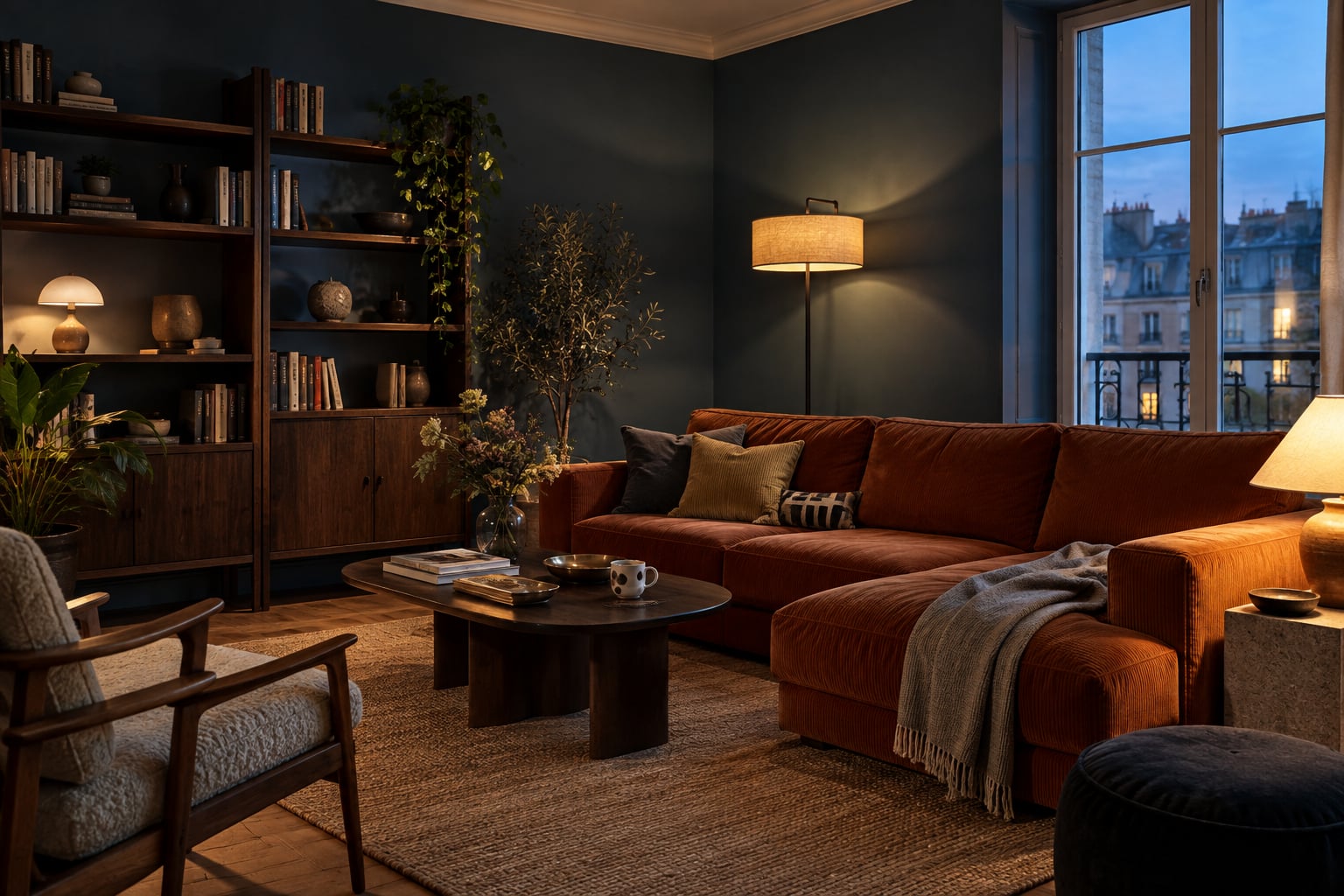
Vary heights without filling every corner
If lamps sit on furniture of similar heights, their pools of light may form a rather uniform line. Try a low lamp on the sideboard with a floor lamp near the armchair. Look mainly at the illuminated surfaces: a wall, a shelf or part of the ceiling. The height of the stand matters less than where the light appears from your seat.
In a small room, check the space taken by the base, shade and swivelling arm. A floor lamp that looks slim in a picture can obstruct a doorway. A table lamp on existing furniture may avoid adding another object to the floor. Our small living room guide extends this balance between objects, walls and space around furniture.
Choose a shade for its light as well as its shape
An opaque downward-facing shade and a diffusing globe illuminate different areas. The first can focus attention on a book or table; the second creates a broader presence around it. Treat these as starting points to check against the actual model. Material, the colour inside the shade and bulb position also affect the result.
Before buying, look for a photograph of the lamp switched on and the manufacturer's compatible bulb information. At home, view it from the sofa, including when leaning back. If the bulb is directly visible, moving or angling the lamp may help more than dimming the entire room. Give a striking decorative lamp a position where it remains pleasant both lit and unlit.
Create evening combinations instead of switching everything on
Prepare three easy combinations: entertaining, reading and watching a film. Separate switches may be enough, without new connected equipment. For reading, favour the lamp that lights the page; for conversation, check that seated people remain visible. A dimmer can refine the mood when the lamp and light source are declared compatible. It cannot replace a well-chosen position.
Compare light colours in the actual room too. Two neighbouring lamps with very different tones may attract more attention than intended. Test them against existing walls and fabrics instead of following a universal Kelvin recipe. In our illustration, ink blue and rust remain distinct: warmth comes from several elements, rather than an orange filter across the whole room.
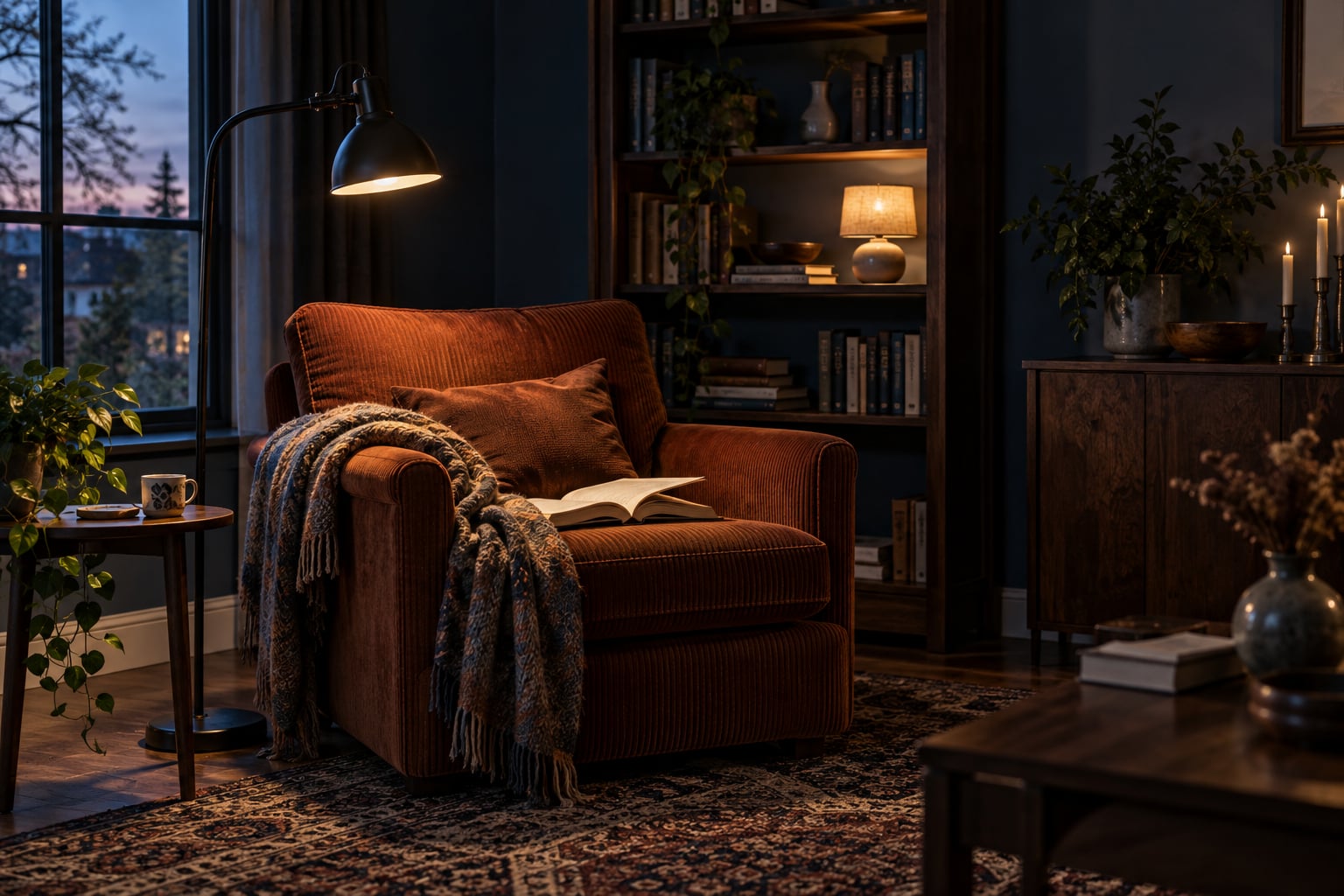
Try it with the room in use
The best check resembles an ordinary evening: book open, screen as normally used and curtains closed if that is your habit. Check reflections from several seats and access to controls. Cables must not cross walkways. Have a professional handle changes to the electrical installation; these suggestions concern choosing and placing lamps in accordance with their instructions.
Keep the combination you genuinely want to use and live with it before adding another lamp. If the room still feels unwelcoming, textiles, seating positions or an easily reached table may help. Our article on making the living room cosy in winter explores those ideas. Light supports what happens in the room; every corner need not become a stage.


