

Fine art paper or photographic paper: what difference does it make on the wall?

“Fine art paper” and “photographic paper” describe families of printing materials, each with several possible surfaces and compositions. The name alone cannot tell you how a print will look.
To choose, consider the finish, paper weight, inks and display conditions. Our paper prints are made on 270 gsm semi-matt photographic paper with pigment inks at our workshop in Fayence.
Fine art and photographic papers: two varied families
Inkjet fine art paper can be smooth or textured, matt or glossy, and cotton-based or cellulose-based, depending on the specific product. It is not necessarily an etching paper. The Hahnemühle FineArt ranges illustrate this variety. This general distinction does not describe the composition of our own paper.
Photographic papers also come in different finishes. They can carry a photograph, a black and white print or an illustration. The word “photographic” therefore does not dictate the subject. Equally, fine art paper does not automatically lose an image’s detail or deep blacks.
Compare specific papers rather than two broad labels. A textured surface gives the paper a presence of its own; a smoother surface lets the picture guide the eye more directly. The file, ink and print settings also contribute to the result.
The finish and reflections in your room
A glossy surface can produce strong reflections when it faces a window or lamp. That does not limit it to pictures held in the hand: its suitability depends on the position and the effect you want. Always look at the print from the place where you will normally view it.
Our prints’ semi-matt finish reduces reflections without guaranteeing their disappearance from every angle. A frame can also add reflections from its transparent protective front. Paper and placement work together; no finish replaces trying the print in the actual lighting.
In the living room, check the view from the sofa. At your desk, consider the lamp and screen. In the bedroom, compare daylight with evening lighting. Avoid prolonged direct sunlight to help preserve the print.
270 gsm: paper weight, not a measure of thickness
Paper weight expresses the mass of one square metre of paper. We use 270 g/m² semi-matt photographic paper. This figure alone does not tell you its thickness, stiffness or resistance to humidity. Two papers with the same weight can have different characteristics.
Handle your print with clean, dry hands, supporting the sheet instead of holding it by a single corner. A 270 gsm paper can still crease, mark or distort. Its weight does not guarantee that it cannot buckle.
The four paper sizes are 21x30, 30x40, 50x70 and 70x100 cm. When framing, check the internal size intended for the print and the frame’s external dimensions. The moulding takes up extra wall space even when the stated frame size matches the print exactly.
What pigment inks tell you
Our prints use pigment inks. Their behaviour over time still depends on the combination of paper and ink, as well as light, humidity and display conditions. These factors are described in Epson’s documentation on print preservation. They do not establish a specific lifespan for our product without corresponding measurements.
A painting reproduction, a minimalist composition and a botanical illustration can all be printed on this paper. Choose according to the subject and the effect you want. None of these categories justifies a promise of permanently unchanged colours or an automatic judgement about another paper’s quality.
 Ball on the misty pitch
View the print
Ball on the misty pitch
View the print
 Morning Ritual
View the print
Morning Ritual
View the print
 Skipping rope to a jazz beat
View the print
Skipping rope to a jazz beat
View the print
 Japan - Misty Mount Fuji
View the print
Japan - Misty Mount Fuji
View the print
Printed to order and trimmed by hand
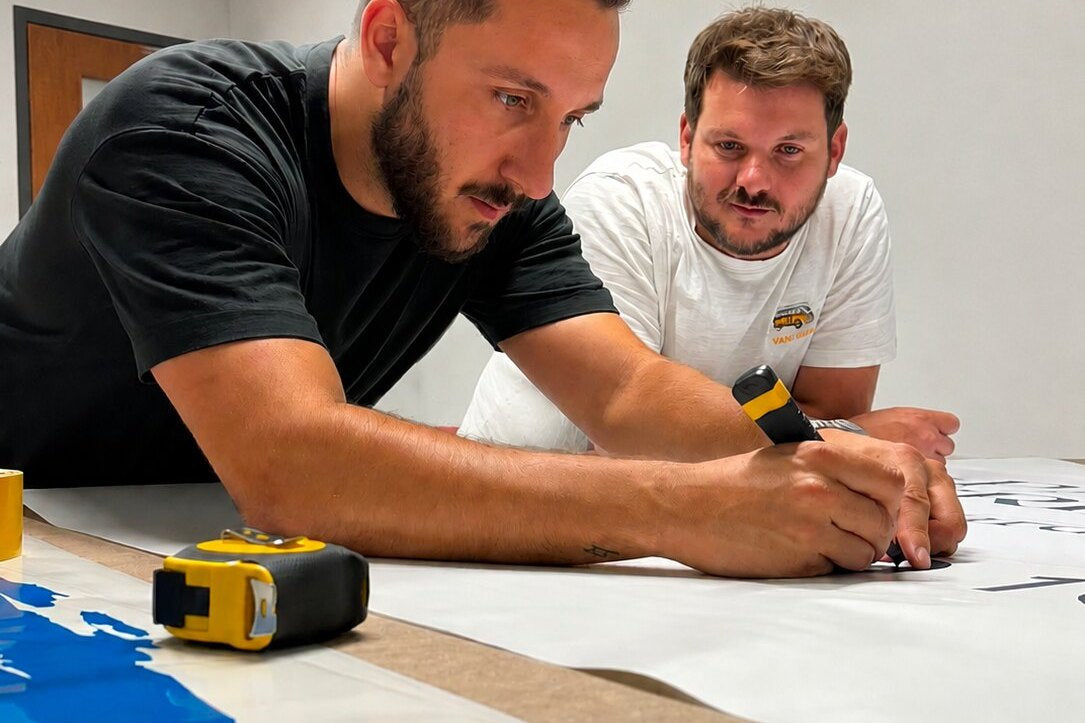
Each print is made to order in our Fayence workshop, then prepared for dispatch. Hand trimming is part of this work. Printing to order describes the production method; it does not necessarily mean that every order is printed on the day it is placed.
The workshop photo shows the handling process and the paper. It cannot by itself demonstrate a particular lifespan or resistance. On arrival, keep the print dry and handle it on a clean surface while preparing to frame it.
What about a print made from your photograph?
Use the original file at the highest available resolution. Sharpness depends on the pixel count, chosen crop and printed size. Heavy cropping reduces the portion of the image used. A screenshot or a photograph retrieved after compression may contain less detail than the original.
The personalised print preview helps you check the composition. It does not replace examining the file at its intended print size. For a photo collage, look at each photograph separately: a blurred image remains a weak point even if the others are sharp.
Then choose the subject, size and frame
To compare sizes, read what size print to hang above a sofa. For the palette, start with your wall colour. If you are arranging several pictures, add their external dimensions and the gaps, as explained in our gallery wall guide.
Finally, compare a landscape, an abstract print or flowers for your room. These paper prints use the same material; the subject, its placement within the image and the chosen size then shape its presence on your wall.
Photographic prints
Compare the subjects, then choose the size of your print on 270 gsm semi-matt photographic paper.
Explore photographic printsChoose a print on semi-matt photographic paper.
Explore photographic prints

