

How can you decorate a bookcase without hiding the books?

To decorate a bookcase without hiding the books, start with an arrangement that lets you find them. Objects then occupy genuinely available spaces, without concealing titles or blocking access. A successful shelf can be quite full: part of its quality lies in how easily you take a volume and put it back after reading.
You do not need to turn books backwards for matching page edges or buy volumes for their covers. Novels, art books, albums and keepsakes can make a personal setting through their differences. The suggestions below concern a bookcase used every day. The illustrations explore deep blue and dark wood versions.
Choose an organisation you can maintain
Before moving objects, group books according to how you look for them: author, subject, language or use. An area for books in progress may be enough to distinguish current reading from the rest. If several people use the bookcase, choose categories everyone understands. An arrangement that looks elegant in a photo loses its value if nobody knows where to return a finished book.
Spine colours can play a part in a small selection, but should not impose a system you find difficult to maintain. You can keep novels together and devote a shelf to larger art books. Avoid splitting a frequently consulted set just to scatter its colours. Decoration begins with this organisation, rather than asking books to become anonymous accessories.
Adjust shelves to the actual formats
Measure your tallest books and check the space needed to remove them. An overly tight shelf makes you handle several volumes to reach the one you want. If shelves are adjustable, try a suitable height for each group while following the furniture’s instructions. Load limits, assembly and any restraints are specific to the chosen bookcase; a decorative arrangement cannot establish them.
Large formats sometimes need their own area instead of being slipped randomly in front of novels. A short stack can hold current reading if you can take out a book easily, without a fragile object on top. Keep valuable or damaged volumes out of these improvised trials and seek advice suited to their condition. Storage should support the book’s use, rather than force it into an uncomfortable shape.
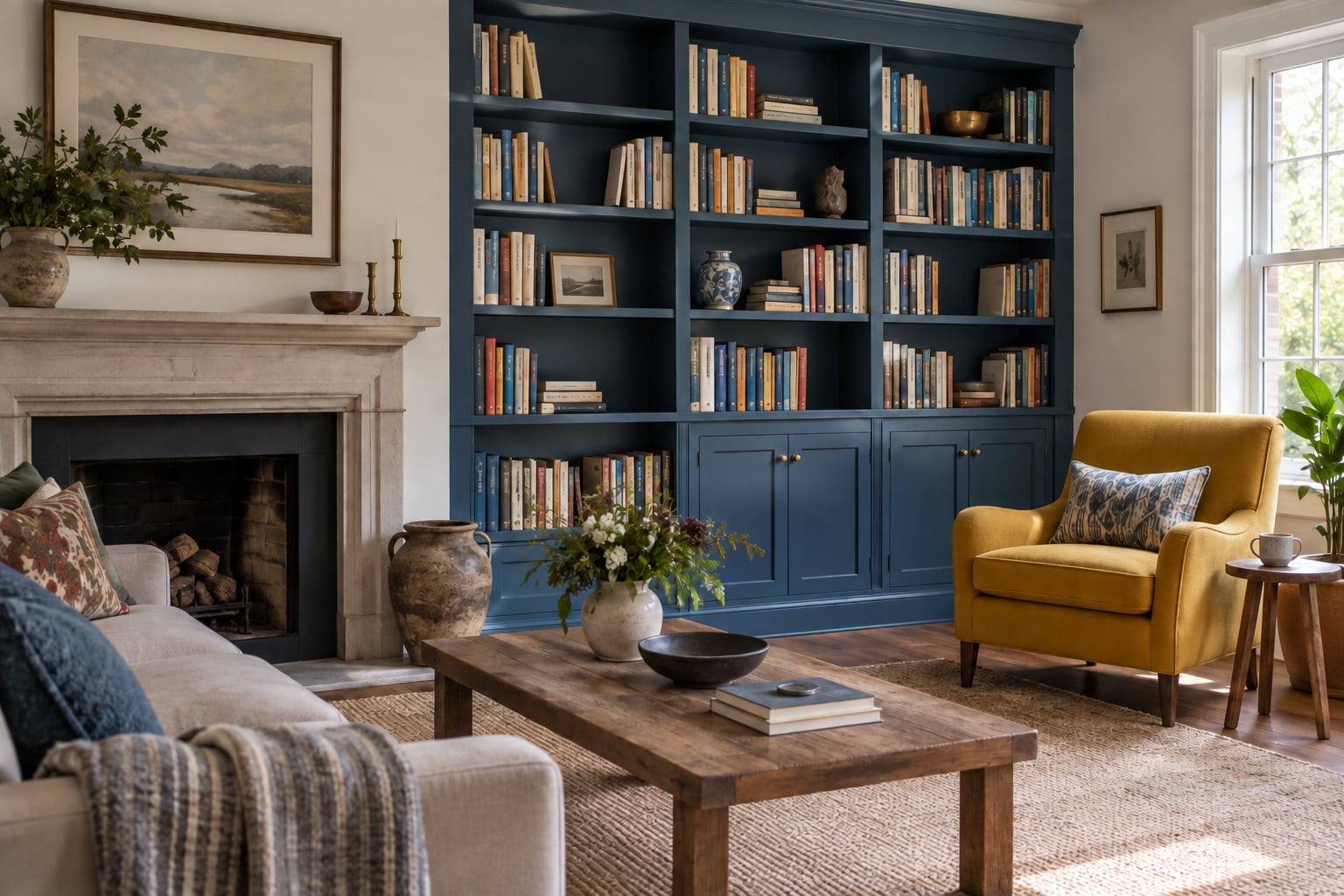
Reserve a few spaces for personal objects
First choose the objects you really want to see: a small ceramic piece, a travel souvenir, a photograph. Give them a position where they remain visible without standing in front of the spines you read. You do not need an object on every shelf. A group in an available space can provide a visual pause while leaving an uninterrupted row of books elsewhere.
Compare materials instead of searching for matching ornaments. In a painted bookcase, matt ceramics and a small shiny object can provide different details. Our article on combining wood, glass and textiles suggests further relationships between surfaces. A personal photograph may also belong, provided that reaching neighbouring books does not require moving it every time.
Let the background work with the books’ colours
A deep blue background gives spines and objects a strong setting; dark wood creates a different relationship with their colours. Neither direction requires books in a single palette. In our illustrations, volumes stay varied and visible. Look at the furniture within the whole room: an armchair’s colour or the neighbouring wall may already connect it with the rest of the living room.
If you are considering painting furniture, first check recommendations for its surface and your chosen product. You can test the aesthetic choice with samples behind a few books, without changing the entire bookcase immediately. For combinations with existing furniture, our guide to mixing light and dark wood offers pointers. The background can connect the shelves without making their contents uniform.
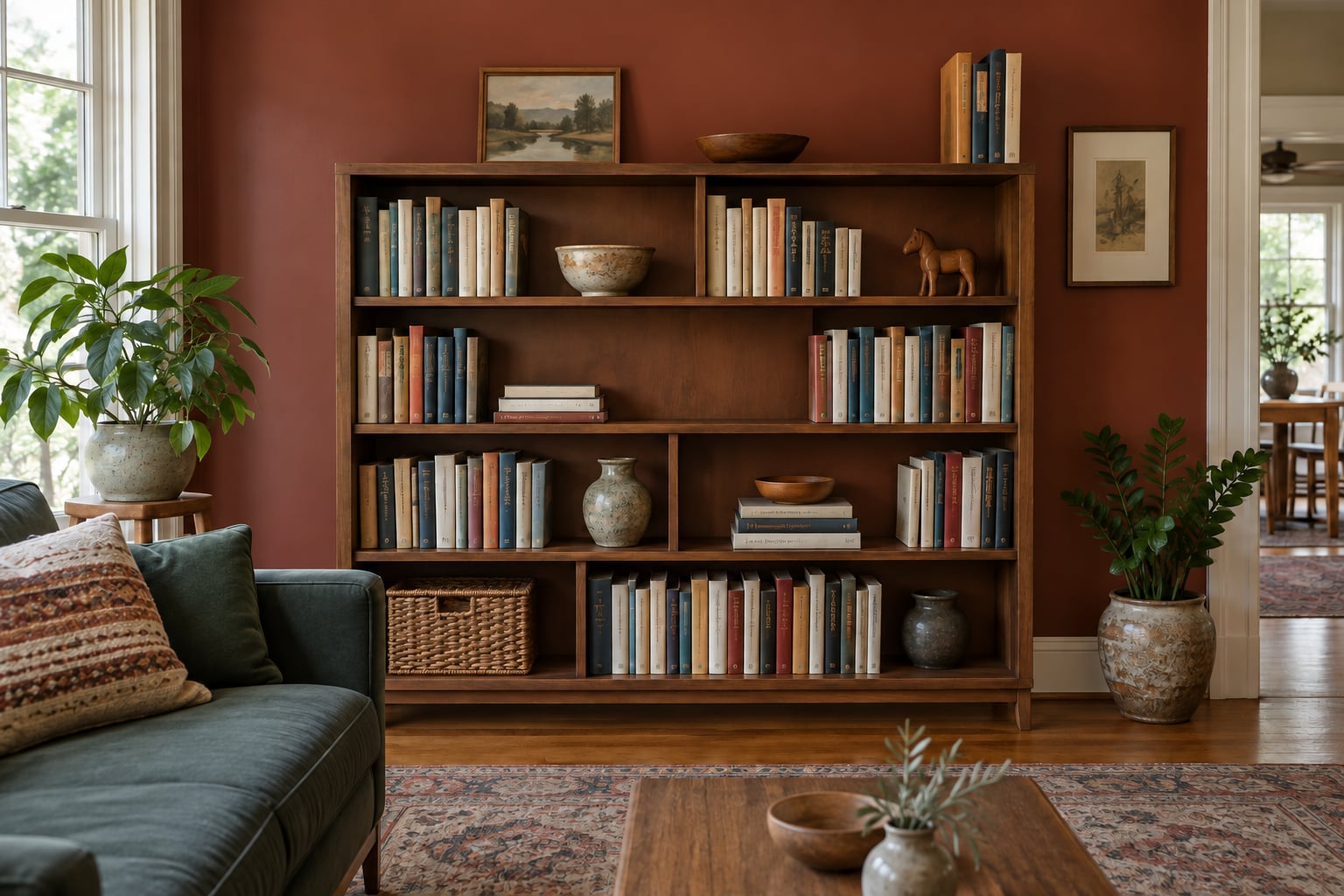
Keep light and small risks in mind
The BnF lists light and moisture among causes of document deterioration. At home, notice where direct sunlight falls and avoid choosing a book’s position only because its cover looks attractive there. An old or fragile volume may have needs beyond those of an ordinary home bookcase.
Plants and drinks also deserve a considered position. Watering above books or placing a cup on a stack complicates an ordinary mishap. Reserve a separate surface for those activities instead. If you install lighting near the furniture, follow its instructions and observe reflections from the armchair. The aim is to read and use the bookcase, not merely to illuminate a display seen from the door.
Let the bookcase change with your reading
An empty space can welcome the next book, a loan to return or something you are reading. It does not need an immediate decorative object. Notice what accumulates in front of the rows over time too: papers, small accessories, volumes without a place. This may point to a need for separate storage rather than a lack of decoration or a shelf that needs more filling.
Change one area at a time: return a series, remove an obstructive object or bring together books you use together. Check that each remains accessible without disturbing the entire shelf. A nearby armchair, a light and a clearly organised bookcase can form a real reading corner. Books keep their role, their titles and their formats, with the freedom to move to your table before returning to the shelf.


